
logo

Why Bitget’s Multi-Chain Stack Feels Like a Real Upgrade for Social DeFi

Whoa! I opened the Bitget app last week and felt that tiny jolt — you know, the kind you get when a UI actually respects your time. Seriously? Yep. The first impression was crisp: multi-chain assets lined up, a swap widget that didn’t hide fees, and a social feed that felt less like noise and more like signal. My instinct said this might be another slick exchange wrapper. Initially I thought it would be just another app, but then the cross-chain flow and wallet integration started to change my mind.

Okay, so check this out—Bitget’s ecosystem stitches together three things people keep asking for: straightforward swaps, a non-custodial wallet that plays nice across chains, and social features that are actually useful. Hmm… that sounds like marketing. But here’s the thing. The swap experience is lean. You select the chain, pick tokens, and the app suggests routes that balance price and gas. No hunting through three DEXs, no copying addresses back and forth. On one hand it’s convenient; though actually, for power users there are still edge cases where you want a manual route. I’ll be honest: that part bugs me a bit, but overall it’s clean.

Technical side first. The swap engine acts like a simple aggregator, but it’s optimized for usability rather than squeezing the absolute last basis point out of slippage. That means fewer failed swaps for newcomers, and fewer support tickets. Initially I thought that sacrifice would feel heavy. However, once I watched a live cross-chain swap (BSC → Ethereum via a bridge) complete with clear confirmations and a progress tracker, I relaxed. Actually, wait—let me rephrase that: I relaxed when the app didn’t ghost me mid-bridge, which is rare.

Bitget app showing multi-chain swap interface and social feed

Why the Wallet Matters (and how to get it)

Bitget’s wallet is the glue. It’s non-custodial, supports EVM chains and some L2s, and it offers a simple backup flow that didn’t make me feel like I was reading a legal contract. I’m biased, but that lowered the bar for secure setup is a huge UX win. Something felt off about many wallets historically: too many warnings, too little direction. Bitget fixes somethin’ there by guiding you through key backup without dumbed-down trickery.

If you want to try it, grab the bitget wallet download and set up a separate seed for your mainnet activities. Seriously—use separate seeds for big plays and daily dabbling. The link will get you the right client quickly, and the mobile + extension pairing is straightforward. (Oh, and by the way… pair with a hardware wallet if you care about nasty hackers.)

Security-wise, Bitget includes typical safeguards: mnemonic backups, optional biometric locks on mobile, and approvals for contract interactions that show exactly what permissions the dApp wants. The permission language isn’t always perfect, but it’s much better than the “Approve unlimited” norm. On one hand, tighter permission granularity can annoy frequent traders. On the other hand, it’s very very important for long-term asset safety.

There are trade-offs. Not every chain is supported, and the wallet doesn’t pretend to be an all-you-can-eat buffet. If you live exclusively on obscure chains, you’ll hit limits. But for mainstream DeFi users—Ethereum, BSC, Polygon, Arbitrum, Optimism—the coverage is solid and the experience is cohesive.

Social trading is where Bitget leans into something different. The in-app feed surfaces trader performance, public strategies, and a copy-trade mechanic that is both transparent and accountable. My first reaction was skeptical. Copy trading often feels like following a celebrity chef without seeing the recipe. But Bitget shows metrics: historical P&L, win rate, max drawdown, and trade logs. That transparency matters a lot; it shifts copy trading from rumor to data.

On the community side, the app encourages conversation around trades and strategies. There’s a lightweight reputation system so you can spot contributors who actually add value. That does create social dynamics (oh, the influencers…), and you should be cautious—correlation isn’t causation, and past performance is not a guarantee. Yes, yes, the usual disclaimers—I’m not your financial advisor. Still, having the social layer in the same app as your wallet lowers friction for learning and following trades, which is how many people actually start participating in DeFi.

Performance notes: swap speeds depend mostly on the chains involved. When both sides are EVM-quick, the flow is near-instant and feels native. Bridges add latency, naturally, and you need to watch confirmations. The app’s UX for this is practical: progress bars, estimated times, and clear callouts when something needs manual confirmation. That honestly reduces panic for newer users, which is underrated.

Fees are straightforward. You see gas estimates before you confirm. The app sometimes suggests paying a bit more to speed up a transaction; that felt fair. Some users will grumble, and they will try to game the gas settings. Fine. For most, the defaults avoid needless failure and make the experience feel cohesive across chains.

Developer tools and integrations are decent too. If you’re building a strategy or bot, the Bitget app’s API and wallet connector options are usable without imposing weird constraints. I’m not building full-scale trading systems on it yet, but it’s handy for prototyping cross-chain strategies and social signals. The team seems to prioritize pragmatic features over flash.

FAQ

Can I use Bitget’s wallet with hardware devices?

Yes. Bitget supports hardware wallet pairing for key operations, letting you keep keys offline while still approving trades through the app. That’s my preferred setup for large holdings.

Is the swap feature safe for large trades?

It’s safe, but expect slippage and liquidity constraints like any DEX/aggregator. For very large orders, breaking trades into chunks or using limit strategies is wiser. The app helps with route suggestions, but watch the numbers.

So where does this leave you? If you’re after a multi-chain wallet that doesn’t act like an obstacle course, and you like the idea of social trading with decent metrics, Bitget is worth a spin. I’m not blindly evangelical here—there are limits and some UX rough edges—but the integration of swaps, wallet, and social features is smoother than most apps I’ve used. Something felt off at first, then it clicked, and now I find myself checking the feed… often. Not because it’s flashy, but because it’s useful. Somethin’ about that feels right.

Try the wallet. Test small. Learn the copy-trade signals before you bet the farm. And if you want the client, go for the bitget wallet download. You’ll thank yourself later—probably. Or not. Either way, it’s worth exploring.

Why I Switched to Rabby: A DeFi Browser Wallet That Actually Feels Like It Was Built for Traders

Okay, so check this out—I’ve tried a dozen browser wallets. Wow! Some are slick. Others are clunky and leave you praying your approvals don’t drain your account. My instinct said there had to be a middle ground. Initially I thought more features meant more risk, but then I noticed Rabby balances practical security with small, helpful conveniences that save time and headaches.

Here’s the thing. Rabby isn’t just another Metamask lookalike. Seriously? No. It takes the baseline expectations of a browser extension wallet and tightens up the parts that actually matter to DeFi users — transaction previews, approval management, and clear per-site controls. On the one hand, the UI is familiar and easy to pick up; on the other hand, the ways it surfaces risk feel intentionally designed, not bolted on.

My first impression was: neat. Then I started poking around. Hmm… the transaction simulation blew me away. It shows the exact token flows and the gas breakdown before you sign, which is a subtle detail that stops dumb mistakes. I did a small test swap that would have reverted on-chain; Rabby flagged the unusual slippage path and saved me from wasting gas. That moment made me realize I was underestimating how much UX matters in wallets.

Security-first features are prominent. Short sentence. Rabby emphasizes per-site permissions, so dapps don’t get blanket access to everything. It also helps you manage token approvals — approvals you gave years ago can be audited and revoked. I’m biased, but that part bugs me when other wallets hide it deep in menus. Something felt off about how often I saw endless approvals when I first audited my accounts with Rabby.

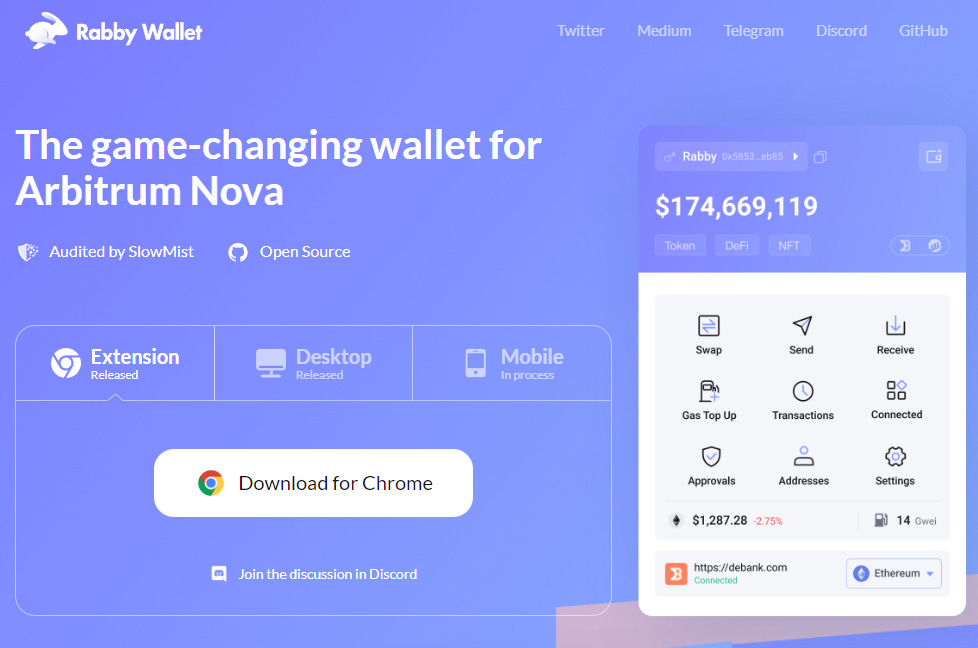
Rabby wallet extension showing transaction simulation and approval manager

What stands out (and why it matters)

Transaction simulation. Seriously helpful. You get a clear look at how funds move between wallets and contracts, which is gold when interacting with complex DeFi strategies. Initially I thought this was fluff, but after a few failed trades elsewhere, I saw its value. On one occasion Rabby’s simulation helped me avoid signing a multi-step swap that redirected tokens unexpectedly.

Approval control is strong and accessible. Medium sentence. You can view and revoke approvals quickly, which reduces long-term exposure from scummy contracts. This is huge when you’re hopping between airdrops, yield farms, and new AMMs. On the technical side, Rabby attempts to make the dangerous default of “approve unlimited” less tempting, and it prompts smarter choices.

Multi-account and hardware support. Short. It’s practical for people who segregate funds — one account for active trading, another for cold storage. Rabby works with hardware wallets so you can keep private keys offline and still use DeFi dapps. That balance of convenience and custody control is what a lot of power users want but rarely get in the same package.

Some features I love quietly: batching transactions (save gas and clicks), built-in swap comparisons, and clear gas controls. Longer thought: gas estimation is presented in a way that feels honest—no mysterious numbers—so you can choose speed or cost depending on the trade urgency, which matters when networks spike during big events.

On the UI side, the experience is crisp without being flashy. Short burst. There are small areas that could be smoother though—like some dialogs that assume prior DeFi knowledge. I’m not 100% sure if newcomers will always understand the implications of certain approvals, and the wallet could nudge them a bit more. Still, the learning curve is lower than many alternatives.

Okay, so how do you get it? If you want to try Rabby as a browser extension, you can download it here: https://sites.google.com/cryptowalletextensionus.com/rabby-wallet-download/. Do the usual checks: verify extension origin, read reviews, and if possible, install on a throwaway profile first to get comfortable.

One honest caveat: I don’t claim Rabby is flawless. There are edge cases where the simulation simplifies on-chain behavior, and very sophisticated contracts can still surprise you. On one hand, Rabby reduces a lot of risk; though actually, wait—let me rephrase that—it’s a mitigation, not a guarantee. Always double-check contract addresses and, when in doubt, move smaller amounts first.

Also, something somethin’ personal: I prefer wallets that let me maintain explicit separation between strategy accounts. Rabby respects that, which is why I migrated a chunk of my active DeFi activity to it. My instinct said trust, but not too much trust—use hardware keys for big positions and Rabby for active trades. This combo has saved me both time and stress.

FAQ

Is Rabby safe for everyday DeFi trading?

Short answer: yes, with caveats. Rabby adds useful safety layers like transaction simulation and approval management that reduce common risks, but it’s still critical to follow best practices: use hardware wallets for big amounts, verify dapp URLs, and avoid approving unlimited allowances unless you understand the trade-offs.

Does Rabby work with multiple chains and hardware wallets?

Yes. It supports several EVM-compatible chains and connects to popular hardware wallets, making it flexible for cross-chain DeFi workflows. That flexibility makes portfolio management easier especially if you spread positions across L2s and alternative EVM networks.

Who should try Rabby?

If you interact with DeFi regularly and care about clearer transaction previews, approval hygiene, and per-site permissions, Rabby’s worth a look. If you’re completely new to crypto, you might want to pair it with a strong guide or a mentor—DeFi still has sharp edges.

Why LayerZero, Omnichain, and Stargate Finance Are Changing Cross-Chain Liquidity

Whoa! Seriously? That’s the reaction I had the first time I watched value move across chains without messy wrapped tokens. My gut said: this could actually stick. At first glance it’s easy to confuse buzzwords with real engineering—omnichain, layer zero, messaging layers—but once you dig in the tradeoffs become clear. I’ll be honest: some of this still bugs me, but the practical wins are hard to ignore.

Here’s the thing. Cross-chain work used to mean either trust-heavy bridges or slow, convoluted liquidity hops. Those days were costly. Now there are protocols trying to reroute how we think about messages and assets between chains, not just move tokens as IOUs. Initially I thought that bridging would always be a security nightmare, but then I started mapping how light clients, relayers, and provable messaging fit together. On one hand the ambition is huge; on the other hand the attack surface grows if components are glued carelessly.

Hmm… the core idea behind LayerZero is deceptively simple. Short sentence. It separates message delivery from verification. Longer explanation: a relayer delivers a message and an oracle verifies that the message corresponds to a block event on the source chain, so the receiving chain can act without having a full native light client for every other chain. My instinct said this design reduces on-chain complexity and gas spend, yet it also concentrates trust into a handful of external actors. Something felt off about that centralization at first, though actually the modularity opens up interesting decentralization paths.

Omnichain thinking flips the script. Instead of “bridge asset A to chain B and wrap it,” omnichain apps try to make assets native across chains or route liquidity in a single atomic operation. Wow. That matters for UX. No more juggling bridged versions of the same stablecoin, or waiting multiple confirmations across multiple legs. Practically, that reduces user friction and slippage, and it can lower MEV exposure in some cases. But it also requires careful composability design—composability that isn’t naive.

Check this out—Stargate Finance tries to operationalize that omnichain promise. Short. They offer a liquidity transport layer that performs atomic swaps between native assets across chains using a shared liquidity pool model. In practice, that lets you send USDC from Chain A to Chain B and receive native USDC on the other side, without wrapped intermediaries. Initially I was skeptical about pooled liquidity, since pools invite impermanent loss and capital fragmentation, but Stargate’s approach leans on a unified liquidity pool per asset family which helps capital efficiency. My instinct said: it’s clever, and it reduces redundant reserves across chains.

Diagram showing liquidity flowing across multiple blockchains via omnichain bridge

How the pieces fit: LayerZero, Omnichain, and Stargate

First, a quick map. Short. LayerZero provides the messaging primitives that allow different chains to talk securely with an oracle and relayer pattern. Medium sentence that explains the next part. Stargate sits on top of LayerZero (and similar messaging rails) and adds liquidity routing plus atomicity guarantees, so users get native assets on the destination chain. On the technical side this means you get a message, a proof, and then a liquidity transfer that finalizes only when the message is verified—so no dangling intermediates. For a deeper jump into Stargate operational docs, see this resource here.

Okay—let’s get practical. If you’re a trader moving $1M across chains, the old pattern was: bridge tokens, wait, unwrap, maybe swap, deposit. Long sentence with multiple clauses that explains the many handoffs and where slippage and MEV slip through. With an omnichain flow you can specify a destination and an expected native token amount; the system uses shared pools to settle the transfer atomically. That reduces round-trip latency and user cognitive load. I’m biased toward anything that improves UX, but the math on fees and slippage is what convinces treasury teams.

Security is the thorn. Short. The layered architecture moves trust around instead of eliminating it. Medium sentence outlining the tradeoff. For LayerZero-like designs, you trust an oracle and a relayer—two independent parties—whereas classic on-chain light clients push verification fully on-chain at higher cost. Initially I thought independent oracles and relayers would be enough, but then I remembered multi-sig failures and oracle manipulations in other contexts. On the flip side, decentralizing or aggregating multiple oracles and relayers can mitigate single points of failure, though that increases coordination complexity and latency.

Another practical piece: liquidity fragmentation vs. capital efficiency. Short. When liquidity is split across many chains, yields and slippage suffer. Stargate combats this by pooling liquidity across supported chains for the same asset family, which is appealing to AMMs and market makers. Still, pooled liquidity can be stressed in extreme market events—think rapid redemptions on one chain while another chain sees inflows—and that means risk models and insurance primitives matter a lot. I’m not 100% sure how all edge cases play out, but the direction is encouraging.

Something else that matters: composability across L2s and rollups. Short. Omnichain messaging allows developers to build dApps that behave as if there were a single state across many chains. That sounds futuristic, and in some cases it is. But it’s also risky: cross-chain composability can create complex flash-loops where actions on Chain A trigger reactions on Chain B back to A, and so on. Longer sentence to explain nested calls and atomicity challenges with subordinate clauses because these things cascade unless carefully bounded. I’ve seen designs that forget to bound callbacks—oh, and by the way—that has bitten projects before.

Performance and cost. Short. LayerZero-like messaging is cheaper than running many full light clients or relying on multiple wrapped token bridges, which helps UX and reduces fees for users. Medium sentence that compares designs. But cheaper often means more off-chain reliance, and that creates different but correlated risks—outsized dependency on infra operators, potential censorship vectors, and monitoring complexity. On one hand you gain speed; on the other hand you now need ops teams to ensure relayers are responsive and honest. That’s an organizational dependency many teams underappreciate.

Real-world adoption hinges on incentives. Short. Liquidity providers need yield and safety; integrators need predictable UX and clear failure modes; end users want simplicity. Projects like Stargate try to align these by offering LP fees and hooking into messaging layers that promise atomic swaps. Longer sentence with analysis: if fee structures, incentive alignment, and insurance mechanisms are miscalibrated you get liquidity vacuums that cascade across chains during stress. My instinct says: watch how incentives evolve, because that’s where long-term resilience is formed.

Developer ergonomics matter too. Short. Building omnichain apps requires new patterns—idempotency, reentrancy guards across cross-chain calls, and observable messaging pipelines. Medium sentence about debugging: when something fails on cross-chain flows you often need observability tooling that spans multiple networks and indexers. It’s a pain. I’m biased toward tooling—good tools accelerate best practices—and we’re early on that front.

What to watch for next

Regulatory haziness. Short. As bridges become more central to value transfer, regulators will notice—especially when stablecoins and fiat rails touch cross-chain flows. Medium sentence noting implications. Projects must design compliance-friendly primitives without destroying permissionless access, a very hard balance. On one hand, privacy and censorship resistance are core values for many builders; though actually safe and compliant rails can coexist with privacy-preserving features if thoughtfully designed.

Interoperability standards. Short. If omnichain systems converge on common primitives, composability gets much stronger. Medium sentence describing benefits. But if too many incompatible variants proliferate, dev fragmentation will slow growth and increase risk. My working thought: standards will emerge, but they’ll be shaped by a few protocols that gain trust and liquidity—network effects win here, somewhat like web standards back in the early internet days.

Insurance and risk markets. Short. Expect bespoke insurance, on-chain capital buffers, and dynamic fee mechanisms to evolve. Medium sentence exploring mechanisms. Protocols that can demonstrate robust capital efficiency plus strong crisis-mode utility will attract long-term LPs. I’m not claiming to know every solution, but the primitive building blocks—reinsurance, options overlays, and on-chain treasuries—are already in motion.

Adoption signals to watch: TVL across multiple chains, number of projects building native omnichain UX, and concrete user flows that prefer native assets on destination chains. Short final thought. These are not vanity metrics if they show sustained, multi-chain user activity. Longer sentence tying it together: once users start preferring true native receipts and flows are smoother than legacy wrapped bridges, the market will gravitate toward systems that can deliver both liquidity efficiency and credible security.

FAQs

Is LayerZero a bridge?

Not exactly. LayerZero is a messaging layer that allows chains to communicate; it can be used by bridge protocols to transfer assets atomically, though it’s not a liquidity provider itself. It provides the primitives (oracle + relayer pattern) while other protocols like Stargate add the liquidity and settlement logic.

Why would I choose Stargate over a traditional bridge?

Stargate focuses on native asset delivery via shared liquidity pools and atomic settlement, reducing wrapped-token complexity and often improving UX for end users. That said, you trade some on-chain verification for performance, so trust assumptions differ compared to fully on-chain light-client models.

Hello world!

Welcome to WordPress. This is your first post. Edit or delete it, then start writing!