


Okay, so check this out—I’ve tried a dozen browser wallets. Wow! Some are slick. Others are clunky and leave you praying your approvals don’t drain your account. My instinct said there had to be a middle ground. Initially I thought more features meant more risk, but then I noticed Rabby balances practical security with small, helpful conveniences that save time and headaches.
Here’s the thing. Rabby isn’t just another Metamask lookalike. Seriously? No. It takes the baseline expectations of a browser extension wallet and tightens up the parts that actually matter to DeFi users — transaction previews, approval management, and clear per-site controls. On the one hand, the UI is familiar and easy to pick up; on the other hand, the ways it surfaces risk feel intentionally designed, not bolted on.
My first impression was: neat. Then I started poking around. Hmm… the transaction simulation blew me away. It shows the exact token flows and the gas breakdown before you sign, which is a subtle detail that stops dumb mistakes. I did a small test swap that would have reverted on-chain; Rabby flagged the unusual slippage path and saved me from wasting gas. That moment made me realize I was underestimating how much UX matters in wallets.
Security-first features are prominent. Short sentence. Rabby emphasizes per-site permissions, so dapps don’t get blanket access to everything. It also helps you manage token approvals — approvals you gave years ago can be audited and revoked. I’m biased, but that part bugs me when other wallets hide it deep in menus. Something felt off about how often I saw endless approvals when I first audited my accounts with Rabby.
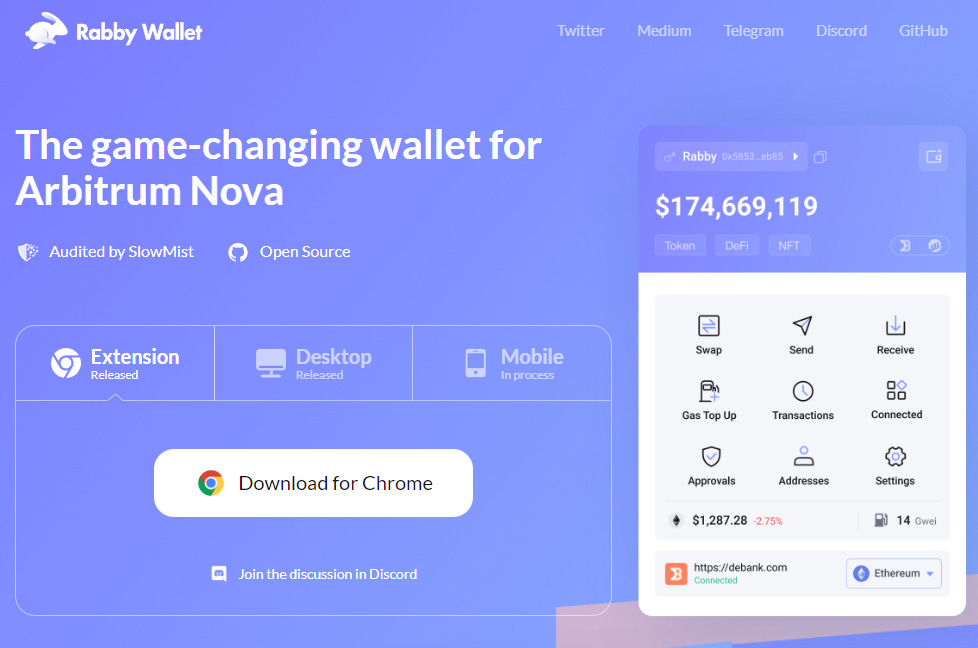
What stands out (and why it matters)
Transaction simulation. Seriously helpful. You get a clear look at how funds move between wallets and contracts, which is gold when interacting with complex DeFi strategies. Initially I thought this was fluff, but after a few failed trades elsewhere, I saw its value. On one occasion Rabby’s simulation helped me avoid signing a multi-step swap that redirected tokens unexpectedly.
Approval control is strong and accessible. Medium sentence. You can view and revoke approvals quickly, which reduces long-term exposure from scummy contracts. This is huge when you’re hopping between airdrops, yield farms, and new AMMs. On the technical side, Rabby attempts to make the dangerous default of “approve unlimited” less tempting, and it prompts smarter choices.
Multi-account and hardware support. Short. It’s practical for people who segregate funds — one account for active trading, another for cold storage. Rabby works with hardware wallets so you can keep private keys offline and still use DeFi dapps. That balance of convenience and custody control is what a lot of power users want but rarely get in the same package.
Some features I love quietly: batching transactions (save gas and clicks), built-in swap comparisons, and clear gas controls. Longer thought: gas estimation is presented in a way that feels honest—no mysterious numbers—so you can choose speed or cost depending on the trade urgency, which matters when networks spike during big events.
On the UI side, the experience is crisp without being flashy. Short burst. There are small areas that could be smoother though—like some dialogs that assume prior DeFi knowledge. I’m not 100% sure if newcomers will always understand the implications of certain approvals, and the wallet could nudge them a bit more. Still, the learning curve is lower than many alternatives.
Okay, so how do you get it? If you want to try Rabby as a browser extension, you can download it here: https://sites.google.com/cryptowalletextensionus.com/rabby-wallet-download/. Do the usual checks: verify extension origin, read reviews, and if possible, install on a throwaway profile first to get comfortable.
One honest caveat: I don’t claim Rabby is flawless. There are edge cases where the simulation simplifies on-chain behavior, and very sophisticated contracts can still surprise you. On one hand, Rabby reduces a lot of risk; though actually, wait—let me rephrase that—it’s a mitigation, not a guarantee. Always double-check contract addresses and, when in doubt, move smaller amounts first.
Also, something somethin’ personal: I prefer wallets that let me maintain explicit separation between strategy accounts. Rabby respects that, which is why I migrated a chunk of my active DeFi activity to it. My instinct said trust, but not too much trust—use hardware keys for big positions and Rabby for active trades. This combo has saved me both time and stress.
FAQ
Is Rabby safe for everyday DeFi trading?
Short answer: yes, with caveats. Rabby adds useful safety layers like transaction simulation and approval management that reduce common risks, but it’s still critical to follow best practices: use hardware wallets for big amounts, verify dapp URLs, and avoid approving unlimited allowances unless you understand the trade-offs.
Does Rabby work with multiple chains and hardware wallets?
Yes. It supports several EVM-compatible chains and connects to popular hardware wallets, making it flexible for cross-chain DeFi workflows. That flexibility makes portfolio management easier especially if you spread positions across L2s and alternative EVM networks.
Who should try Rabby?
If you interact with DeFi regularly and care about clearer transaction previews, approval hygiene, and per-site permissions, Rabby’s worth a look. If you’re completely new to crypto, you might want to pair it with a strong guide or a mentor—DeFi still has sharp edges.